
Ask ten paracord owners what the cord is for and you will get ten short answers: bracelets, lashing, emergency rope. All true, and all incomplete. Paracord earned its place in kits because it is really several tools in one package — a strong outer cord for tying and lashing, and a bundle of inner strands that become thread, fishing line, and snare material the moment you gut it.
Below is the long list, organized the way people actually use the cord: survival first, then camp and outdoors, home and vehicle, and everyday carry. One rule before we start: paracord is not climbing rope and none of these uses involve trusting it with a human life. Within that limit, here are 101 jobs it genuinely does well.
Survival
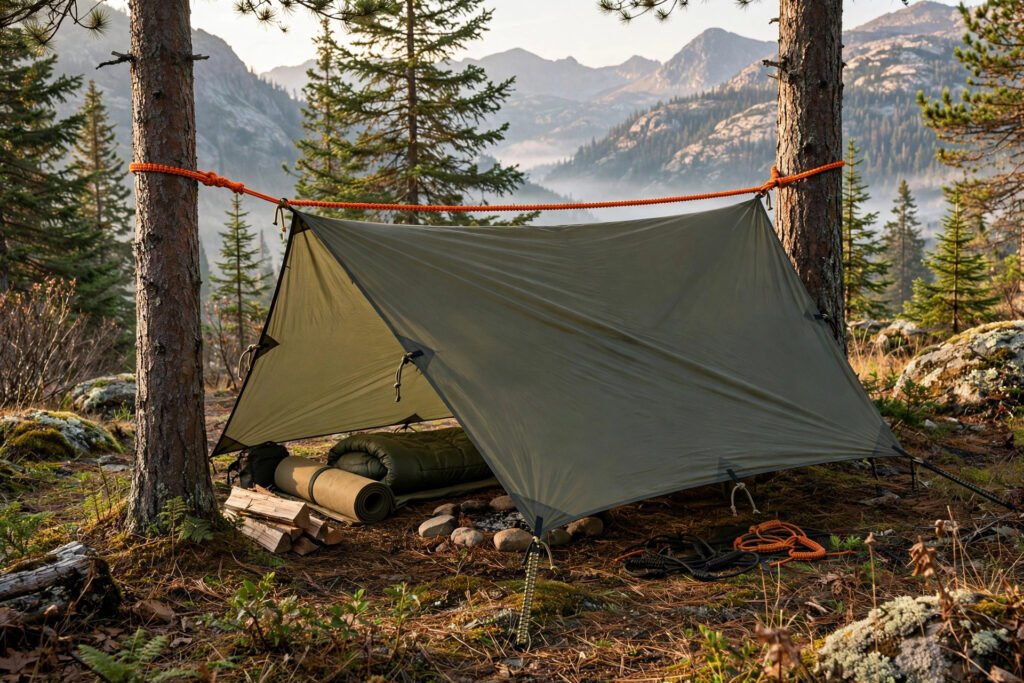
- Shelter ridgeline — the main line a tarp hangs from.
- Guy lines — stake out tarps and improvised shelters.
- Lashing shelter poles — bind a debris-hut or A-frame together.
- Hanging a bear bag — get food up and away from camp.
- Emergency tourniquet — last resort only, wide and padded, never cord alone on skin.
- Splint ties — lash a splint to an injured limb.
- Sling for an injured arm — folded cord supports the forearm.
- Fishing line — one gutted inner strand, twisted yarn and all.
- Gill net — strands woven between two cord lines.
- Snares — inner strands for small-game loops.
- Trotline — a main line with baited strand droppers.
- Bow drill fire set — cord for the bow that spins the drill.
- Fishing lure repair — strand as thread and binding.
- Gear repair thread — inner strand sews torn packs and clothing.
- Bootlace replacement — a cut length outlasts the original laces.
- Spear lashing — bind a point to a shaft.
- Trap triggers — cord releases deadfall and cage traps.
- Water container carry — a cord harness for an improvised bottle.
- Signaling panel ties — anchor a bright panel for rescuers.
- Clothesline in camp — dry wet clothing before it becomes a problem.
- Stream crossing handline — a steadying line, never a safety line.
- Snow shelter vent and door ties — keep a quinzee organized.
- Firewood bundle carry — a looped sling for an armload of wood.
- Improvised stretcher lashing — bind poles and fabric into a litter.
- Marking a trail back — small tied lengths as route flags.
- Hanging food over water — keep supplies dry and off the ground.
- Tool retention — dummy-cord your knife so it cannot be lost.
Camp & Outdoors
- Tarp ridgeline and tie-outs — the classic paracord job.
- Tent guy lines — replace missing or frayed stake lines.
- Hammock accessories — hang organizers and under-quilt lines (not the suspension itself).
- Lantern hanger — hoist a light over the camp table.
- Camp kitchen line — hang pots, utensils, and a dish towel.
- Clothesline between trees — swimsuits and base layers dry fast.
- Lashing gear to a pack — sleeping pad, tent poles, extra layers.
- Zipper pulls — knotted cord ends are glove-friendly.
- Pack repairs in the field — strand thread and a needle get you home.
- Dog leash — woven or braided, it handles a strong puller.
- Dog collar — sized with the same weaves as a bracelet.
- Pet tether at camp — clip a long line to a tree, never left unattended.
- Boat line for small craft — painter lines and gear tie-downs on kayaks and canoes.
- Anchor line for a float tube — light duty, within reason.
- Fishing rod lashing — secure rods for transport.
- Tackle organization — lanyards on pliers, nippers, and boxes.
- Hunting gear hoist — raise a pack or unloaded gear into a stand.
- Game drag — a looped handle makes a deer drag less miserable.
- Tree stand accessory cord — hoist small items, not people.
- Decoy rigging — replace tangled decoy lines.
- Garden trellis ties in camp plots — soft on stems, strong in wind.
- Bike gear lashing — strap a dry bag to a rack.
- Ski and pole carry strap — a simple loop sling.
- Snowshoe binding repair — cord outlasts broken straps.
- Ice shelter tie-downs — anchor against lake wind.
- Laundry bag closure — a drawstring that never snaps.
- Bear-canister carry handle — weave a grip onto awkward canisters.
Home & Vehicle
- Trunk tie-down — keep cargo from sliding around.
- Roof load lashing — light loads, properly tensioned, checked twice.
- Moving blankets secured — wrap and tie furniture protection.
- Garage storage hoists — hang bikes and bins overhead.
- Garden plant ties — support tomatoes and vines without cutting stems.
- Trellis and fence repair — temporary lashings that last seasons.
- Gate latch cord — a pull loop through the fence.
- Hanging planters — woven hangers or simple knotted slings.
- Christmas light and decoration hanging — indoor and out.
- Picture hanging — light frames on a doubled length.
- Curtain tiebacks — a braided loop does the job neatly.
- Furniture moving sling — loop handles for awkward pieces.
- Appliance cord bundling — tidy loops instead of twist ties.
- Ladder tie-off on a vehicle rack — keep it from shifting.
- Tailgate load flagging — tie on a warning flag for long loads.
- Kids’ swing repair rope — replace worn seat ropes on small swings, checked often.
- Pet gate and barrier ties — temporary and removable.
- Hose and cable coiling — a hank tie keeps the garage sane.
- Tent and awning repairs at home — strand thread for canvas.
- Drawer pull replacement — a knotted loop until the hardware arrives.
- Broom and tool hanging loops — everything off the floor.
- Bundle firewood for the porch — neat, carryable stacks.
- Secure a tarp over a woodpile — the backyard classic.
- Hold a car door or hatch while loading — a temporary prop tie.
EDC & Everyday
- Survival bracelet — 8–12 ft of cord you always have (cobra weave, about 1 ft per finished inch).
- Key fob — a short weave that makes keys findable.
- Knife lanyard — retention and a better grip draw.
- Flashlight lanyard — wrist loop for night work.
- Phone and camera dummy cords — over water, they pay for themselves.
- Wallet chain substitute — braided cord, quieter than metal.
- Glasses retainer — light cord (275 or gutted) keeps shades on.
- Watch strap replacement — woven straps are a whole sub-hobby.
- Badge and ID lanyard — breakaway knot recommended at work.
- Tool tethering on ladders — dummy cords for drills and drivers.
- Bottle carry loop — clip a water bottle to a pack strap.
- Umbrella wrist loop — replace the missing strap.
- Luggage identifier — a bright weave ends suitcase mix-ups.
- Zipper pull replacements everywhere — jackets, bags, tents.
- Cord-wrapped tool handles — grip and insulation in one wrap.
- Knife handle wraps — skeleton-handled blades get usable grips.
- Fidget and practice knots — learn a new knot a week.
- Cat toys — a knotted length, supervised play only.
- Dog toy braids — heavy braids for gentle chewers, supervised.
- Gift wrapping ties — a woven toggle beats ribbon.
- Book and journal closures — a loop-and-bead fastener.
- Measuring cord in a pinch — pre-mark a length for quick checks.
- The spare hank itself — 25–50 ft coiled in every bag, because the next use is the one not on this list.
Getting the lengths right
A list this long is useless if every project starts with a guess and ends two feet short. Before you cut, run the numbers: a cobra bracelet needs about 1 ft of cord per finished inch, collars and leashes scale from there, and our Paracord Length Calculator covers the common weaves. Stock your kits from the bug-out bag checklist, and if you are buying fresh cord, start with the tested options in our guide to the best paracord.
FAQ
How much paracord should I carry day to day?
A woven bracelet puts 8–12 ft on your wrist, and a 25–50 ft hank in a bag covers nearly everything on this list. Vehicle kits do well with 100 ft.
Are the inner strands really useful, or is that a myth?
Real. Each inner strand is a twisted nylon yarn that works as fishing line, sewing thread, and snare material. In genuine 550 cord there are seven of them, so a short length of cord carries a surprising amount of light line.
What can paracord NOT do?
Anything life-safety: climbing, rappelling, towing vehicles with people nearby, or suspending loads over anyone. It also degrades in prolonged UV and loses strength when knotted, so inspect and replace working cord regularly.
Which single item from this list should a beginner make first?
The cobra bracelet. It teaches cutting, measuring, and the most useful weave in an evening — and you end up wearing the result.