
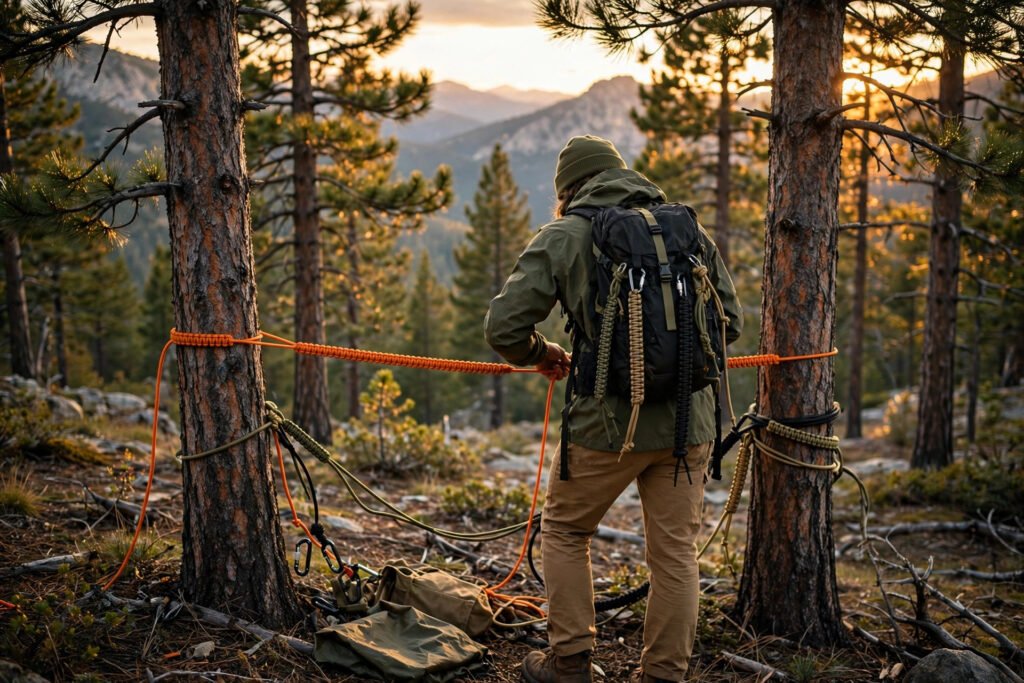
550 paracord is the one rope worth carrying into the outdoors. It is light enough to forget about, strong enough to trust for shelter and lashing, and — once you pull it apart — it becomes fishing line, sewing thread, and snare material too. Commercial cord comes in every color, lengths run from 50 ft to 1,000 ft, and 100% nylon resists rot and mildew. If pack space is limited, about 50 ft is the right carry: enough for every job below, with some left over. Just be sure to replace any rope you have used before the next trip. Here are the five areas where it earns its place, from the original ParaVival post, refreshed.
1. Repair and hygiene
Things break in the field, and paracord is the repair kit. The inner strands sew torn clothing — keep a needle in your first-aid kit and you have a sewing kit that weighs nothing. The same strands patch torn gear, replace a broken zipper pull, and tie down a load on the car roof. Rig a clothesline between two trees and wet clothing dries instead of staying wet against your skin — and wet clothes in dropping temperatures are how hypothermia starts. A length also works as a tow rope for a light load, a pulley line, or a ladder rope for hauling gear. And when there is nothing else, an inner strand works as dental floss. It is not glamorous. It is the kind of small hygiene that keeps a trip from turning miserable.
2. Shelter and roughing it
This is paracord’s home ground. Tie each corner of a tarp for a shelter, rig a hammock, lash logs together for a raft, and use a length as the bow string of a bow drill to start a fire. A sling from folded cord carries an injured arm or a load of firewood, and spare cord secures camping gear and ties down loads so nothing blows away or slides off in the night. The rule for all of it is the same: paracord is a utility line, not a safety line. It holds shelters, gear, and loads — never a person.
3. Fishing
Gut the cord and the inner strands become fishing line — one strand, twisted yarn and all. A small lure can be made from the sheath and inner strands, and the same line secures a raft or boat so it does not drift off while you fish. A 550 cord hank carries seven strands per length, so a short piece of cord is a surprising amount of fishing line. Keep the line short and the knots simple; an inner strand is strong enough for panfish and small stream fish, not for hauling in a trophy.
4. Hunting
Core strands make snare traps for small game, and a bola — weighted cords swung and thrown — has long been used to capture big game birds. A bola is three weighted cords joined at a center; it tangles the legs of a running bird, and it takes practice. Both are inner-strand jobs: light line, quiet, and easy to carry in quantity. Know your local regulations before you set anything; snares and traps are legal in some places and seasons and not in others.
5. First aid
First aid is where paracord’s versatility turns serious. Tie a sling for an injured arm. Sew a wound with an inner strand — untwist the strand for a thinner sewing thread. Splint a fracture by tying straight sticks around the site. Lash poles and fabric into a stretcher. And as a last resort, a wide, padded length can serve as a tourniquet — never cord alone on bare skin, and never as a first choice, because cord alone cuts in and does more harm than good. These are emergency measures for when proper supplies are not at hand, and they are worth knowing before you need them.
Want more?
Five uses barely scratch the surface. The full list — 101 uses for paracord — covers survival, camp, home, and everyday carry, including the inner-strand tricks most lists miss. And if you are building the kit these uses belong in, our bug-out bag checklist lays out a complete 72-hour pack, system by system, with the cordage mix that actually works.